What goes in
Most restaurants won't tell you where their ingredients come from. We built our entire identity around it. Every ingredient has a name, a region, and a reason. Here's why it matters — and why you can taste the difference.
Why it all starts here
American flour and Italian flour are not the same thing. They aren't even close. Italian wheat is softer, slightly sweeter, and lower in harsh gluten proteins. American wheat — grown from high-yield varieties developed in the early 1900s to maximize per-acre output — has more complex, harder-to-digest gluten structures.
Italy regulates its flour by fineness of grind and ash content. The result is a product that's cleaner, more digestible, and dramatically different in texture. When you make pasta with imported Italian flour, you feel the difference in the dough immediately — it's silkier, more elastic, and more forgiving. The pasta that comes out is tender with the right bite.
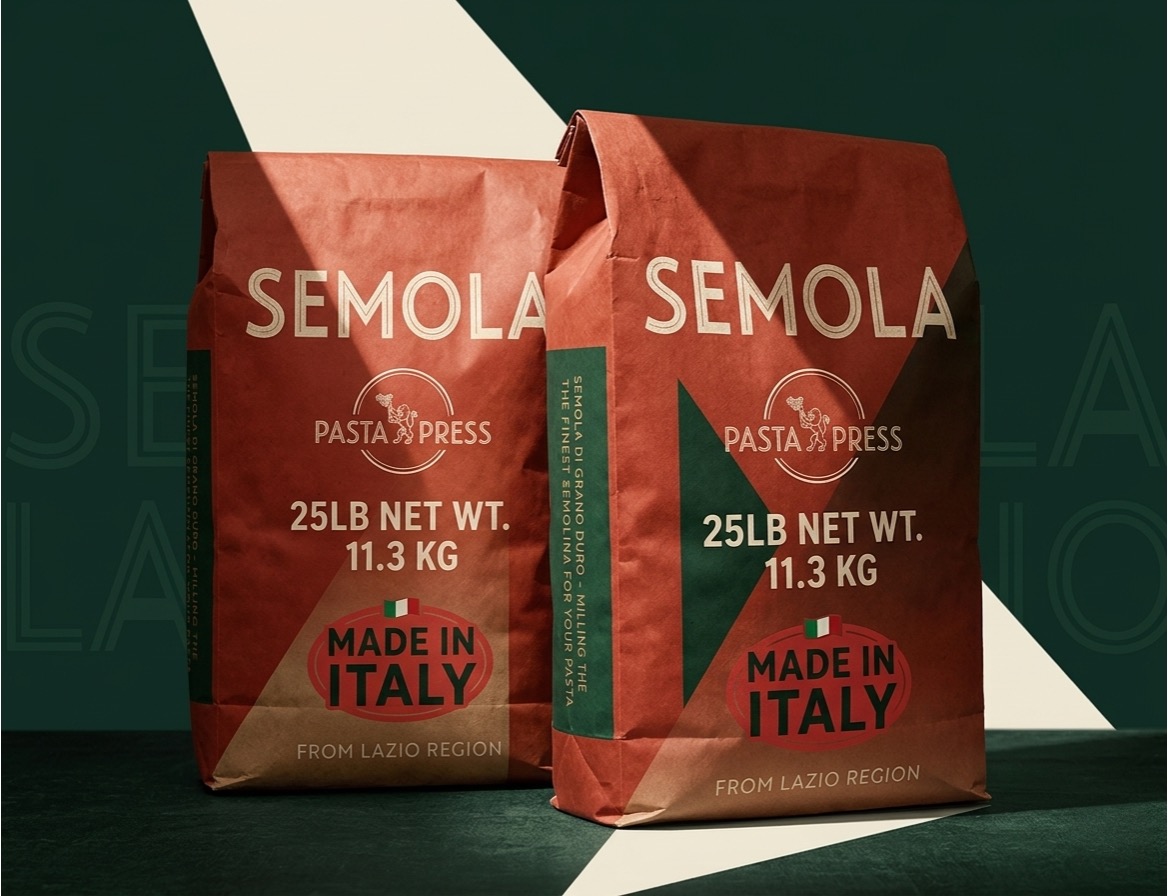
We import both Semola and 00 flour directly from a Mill in Italy. No substitutes. No compromises. This is why our pasta tastes the way it does — and why gluten-sensitive customers who can't eat American pasta often eat ours just fine.
Lazio, Italia · Hard durum wheat
Twice-milled hard durum wheat with 12–14% protein. Golden in color. Gives our pasta its signature texture, structure, and golden hue. Used for our fresh-cut shapes — pappardelle, tagliatelle, fettuccine and more. The backbone of every bowl.
Lazio, Italia · Soft wheat
The finest grind in Italian milling — like silk through your fingers. Soft wheat milled twice to remove all bran and germ. Creates pasta doughs that are exceptionally smooth, elastic, and delicate. Used in our egg-based pasta and fresh lasagna sheets.
Joe Rogan on American vs Italian flour
"Go eat pasta in Italy. You won't feel bad at all. We're poisoned."
— Joe Rogan, The Joe Rogan Experience · Episode #2342 with Jim Norton
On his June 2025 podcast, Joe Rogan broke down exactly why American wheat makes people feel terrible — and why the same people thrive on European flour. American wheat has been stripped of nutrients, bleached with chlorine, and treated with potassium bromate (a known carcinogen banned in Europe). On top of that, glyphosate is used to dry wheat before harvest. It's not gluten intolerance — it's ingredient intolerance.
Italian flour doesn't do any of that. Which is exactly why we import ours.
Watch the clip ↗Imported from Italy
Click a highlighted region on the map — or tap an ingredient card — to learn its origin and why we chose it.
Lazio, Italia
The foundation of every bowl. Hard durum wheat, twice-milled, imported from Lazio.
Italy's most regulated wheat. Grown in the hot dry climate of central Italy. Twice-milled to a fine golden powder with 12–14% protein — giving pasta its perfect bite, golden color, and structure. Our gluten-sensitive customers eat this when they can't eat anything else made in America.
Lazio, Italia
The softest flour in the world. Silky, ultra-finely milled, from Lazio.
Doppio zero — sifted to the finest grade, almost like talcum powder. Creates a dough that stretches without tearing, producing pasta with a delicate texture impossible to replicate with American flour.
Lazio, Italia
Cured pig cheek from Lazio. The non-negotiable ingredient in Carbonara and Amatriciana.
Do not substitute with bacon or pancetta. Guanciale is cured with black pepper, thyme, and rosemary for weeks. Its fat melts differently — creating the glossy sauce that defines Roman pasta tradition.
Lazio, Italia
Aged sheep's milk cheese. Sharp, salty, essential.
D.O.P. means this can only be called Pecorino Romano if made in Lazio from sheep's milk. The defining cheese of Cacio e Pepe, Amatriciana, and Carbonara.
Alto Adige, Italia
Smoked, cured pork leg from the Italian Alps. Protected by European law.
Dry-cured with juniper, rosemary, and bay leaves, then air-cured for at least 22 weeks in mountain air. D.O.P. guarantees it can only come from Alto Adige.
Padova, Veneto · Italia
Slow-cooked cured ham from Padova. Delicate and sweet.
No water injection, no additives — just pork, salt, and tradition. Completely different from American cooked ham.
Calabria, Italia
The heat behind our Arrabbiata. Italy's spiciest region.
The Calabrese chili has a distinctive fruitiness alongside its heat — not just hot, but complex. This is what makes our Arrabbiata roar.
Trapani, Sicilia · Italia
The world's most celebrated table olive. Buttery, mild, bright green.
The Nocellara del Belice variety is unlike any other olive — buttery and mild where most are sharp and bitter. Picked young in Trapani, cured in brine.
Po Valley, Italia
Aged hard Italian cheese from the Po Valley. Nutty, crystalline, essential.
Produced exclusively in the Po Valley, aged minimum 9 months. D.O.P. spans five northern Italian regions. Ideal grated over fresh pasta.
Sourced in the US · Italian roots
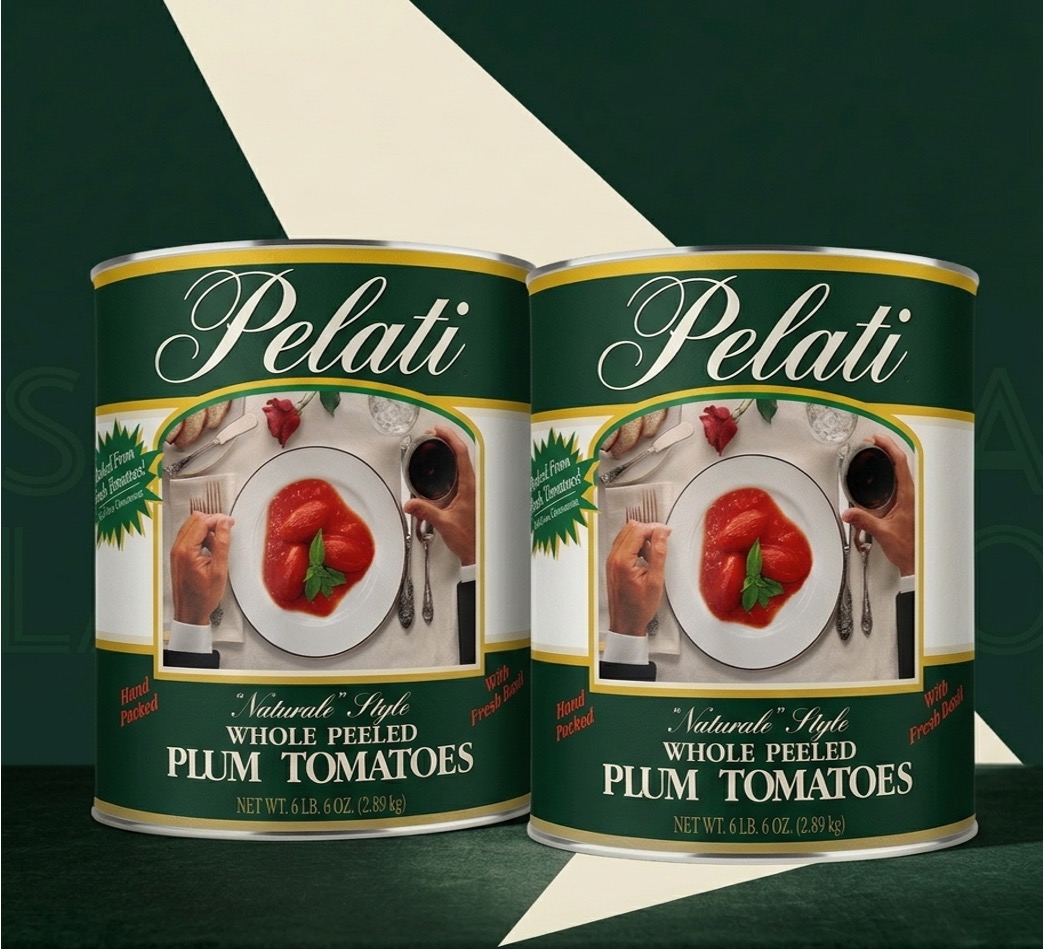
We tried every Italian canned tomato brand we could find. They were all too acidic — great in Italy, but something about the journey and the processing left a sharp edge we couldn't get behind.
The journey of a tomato matters: harvested at the right moment, processed while the flavor is still alive, packed in cans chosen to preserve purity without unwanted metallic taste, and never left sitting for long periods in overheated warehouses.
Good sauce starts long before it reaches the kitchen. The correct flavor of a tomato is crucial to achieving authentic Italian dishes. It is immediately recognized by native Italians, and we insist on getting it right.
| Semola di Grano Duro | Lazio, Italia | Imported |
| 00 Flour (Doppio Zero) | Lazio, Italia | Imported |
| Guanciale | Lazio, Italia | Imported |
| Pecorino Romano | Lazio, Italia | D.O.P. |
| Grana Padano | Po Valley, Italia | D.O.P. |
| Speck | Alto Adige, Italia | D.O.P. |
| Prosciutto Cotto | Padova, Veneto · Italia | Imported |
| Castelvetrano Olives | Trapani, Sicilia · Italia | Imported |
| Calabrese Peppers | Calabria, Italia | Imported |
| Pancetta | Italian-style · USA | |
| Tomatoes | Stanislaus · Modesto, CA | Italian roots |
| Olive Oil | Italian-family · USA | Italian roots |
Now that you know what goes in — come taste what comes out.